

Tofu cat litter has shifted from a niche eco-brand SKU to a serious line item for distributors over the past three years. What started as a plant-based curiosity in East Asian markets is now moving through North American, European, and Australian retail chains — driven by consumer demand for flushable, biodegradable, low-dust litter and by distributor margin opportunities in a category where bentonite commodity pricing has been volatile. This guide is for B2B buyers evaluating whether to add or expand a tofu pellet line: what the product is, what it costs you to ship, how it compares to bentonite on the metrics your retail buyers care about, and what to ask any prospective supplier before you commit to a first container.
Why this matters to distributors and wholesalers: Distributors and wholesalers evaluating plant-based cat litter SKUs should treat tofu pellets as a distinct product category from bentonite, not a soft substitute. The economics differ: tofu’s raw material is a soybean-residue by-product of tofu and soy-milk production, which keeps input cost stable against the bentonite market. The shipping math differs: tofu is roughly 40–50% lighter per litre than sodium bentonite, which changes your per-container landed cost. And the end-customer use case differs: flushability, biodegradability, and low-dust performance open the SKU to apartment-dwelling and eco-conscious consumers that bentonite cannot reach.
Key Takeaways
- Bulk cat litter buyers are increasingly shifting SKUs toward tofu pellets because the raw-material input cost tracks soy-feed markets, not bentonite mining — a more stable 12-month pricing curve for distributors planning fixed-price contracts.
- Tofu pellets weigh 40–50% less per litre than sodium bentonite, which raises a 40′ HC container load from 18 tonnes (bentonite) to 22–28 tonnes (tofu) and drops per-kg landed cost sharply even at higher factory unit prices.
- Flushability (small clumps, residential use) and EN 13432 / ASTM D6400 biodegradability open tofu to apartment-dominant and eco-conscious retail channels that bentonite cannot reach — a meaningful channel-expansion lever for distributors.
- Per-batch SGS / CMA lab reports on dust, clumping, and ammonia-lock, plus BSCI / ISO 9001 social-compliance audits, are the documentation filter that separates tier-one retail suppliers from independent-only suppliers.
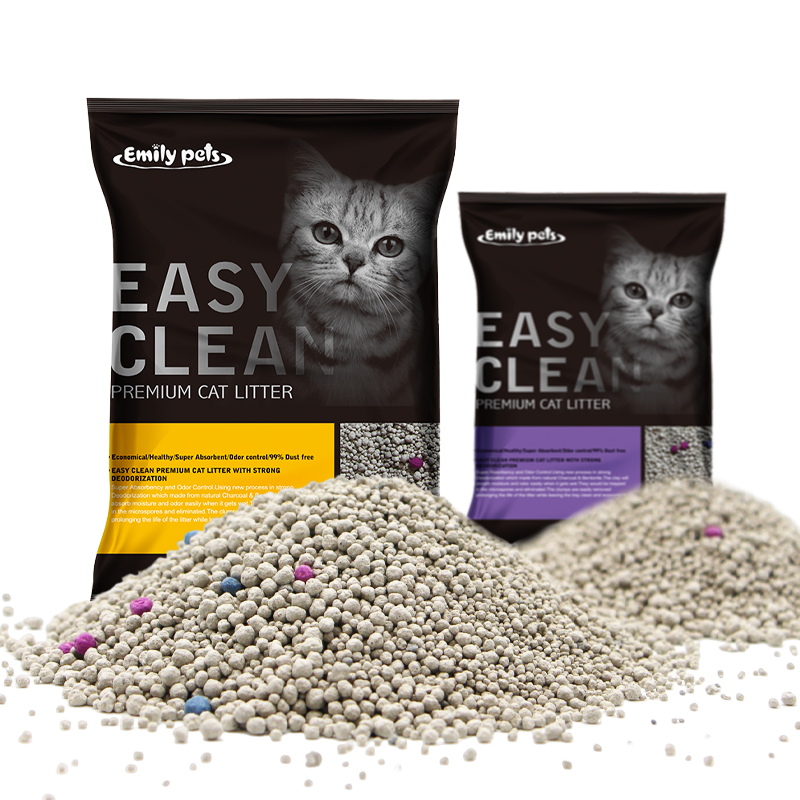
- Emily Pets’ 5,000+ tonnes/month output supports 20-day replenishment cycles for 200-tonne wholesale orders; private-label MOQs start at one 20-foot container with artwork support across 80+ jurisdictions.
- Tofu retail prices run USD 2.20–3.50 per kg versus USD 1.40–2.20 for bentonite — tighter gross margins but measurably higher velocity in apartment-dominant metros.
- Filter suppliers on BSCI / ISO 9001 / SGS paperwork first, then per-batch lab reports, then capacity and lead time — in that order — before signing a first purchase order.
Tofu Pellets vs Bentonite: At a Glance for Distributors
Side-by-side comparison for distributors evaluating tofu pellets against sodium bentonite on the metrics that drive shelf velocity and shipping economics.
| Metric | Tofu Pellets (premium 1.5mm) | Sodium Bentonite | Distributor Implication |
| Raw material | Soybean residue (agricultural by-product) | Mined sodium bentonite clay | Tofu tracks soy-feed prices, bentonite tracks mining + energy |
| Weight per litre | ~0.5–0.6 g/cm³ | ~0.9–1.0 g/cm³ | Tofu loads 22–28 t/40′ HC vs bentonite 18 t/20′ GP |
| Clumping chemistry | Starch-gel (water-soluble) | Sodium swelling (water-insensitive) | Tofu clumps flush; bentonite clumps do not |
| Flushability | Yes, in small amounts | No — prohibited by most wastewater authorities | Tofu opens apartment / eco channel |
| Biodegradability | Yes — EN 13432 / ASTM D6400 | No — mining waste stream | Tofu meets EU packaging directive |
| Dust profile | <0.5% (premium lines) | 1–3% typical | Tofu wins low-dust positioning in retail copy |
| Retail price range (USD/kg) | USD 2.20–3.50 | USD 1.40–2.20 | Tofu gross margin tighter but velocity higher |
| Container load (40′ HC) | 22–28 tonnes | 18–22 tonnes | Tofu lands more kg per freight dollar |
Why Tofu Cat Litter Is a Different Category from Bentonite
The first thing to understand about tofu cat litter is that it is not a soft substitute for bentonite. It is a different product made from a different feedstock. Tofu pellets are compressed from soybean residue — a by-product of tofu, soy-milk, and soy-protein production that would otherwise go to animal feed or landfill. Bentonite is a mined clay. The two products behave differently in every parameter your retail buyer will ask about: weight per litre, clumping chemistry, biodegradability, flushability, and dust profile. Sourcing them from a single supplier that does both — like Emily Pets — is increasingly common for distributors who want a tofu line without giving up their bentonite line.
For an example of a tofu pellet line with full BSCI / ISO 9001 / SGS documentation, see Emily Pets wholesale tofu cat litter. For certification context, the EN 13432 industrial compostability standard is the EU reference for biodegradable plastics and applies to tofu pellet base material.
Raw material and price stability
Soybean residue is an agricultural by-product with pricing tied to soy crush margins, not to mining. Over the past five years, sodium bentonite spot pricing has swung with energy and transport costs (it is a heavy, low-density-per-tonne mineral), while tofu litter input cost has tracked more closely with soy meal and feed markets. For a distributor planning a 12-month pricing window, tofu offers a more stable cost curve than bentonite in most quarters.
Shipping weight: the biggest B2B lever
Sodium bentonite weighs roughly 0.9–1.0 g/cm³; compressed tofu pellets weigh roughly 0.5–0.6 g/cm³. That 40–50% weight difference compounds across a 20-foot container: a standard bentonite container load is around 18 metric tonnes, while a tofu pellet container load is 22–28 metric tonnes depending on packaging. Per kg landed cost on tofu drops sharply even when the per-kg factory price is slightly higher than bentonite.
Performance: Clumping, Odor Lock, and Low-Dust
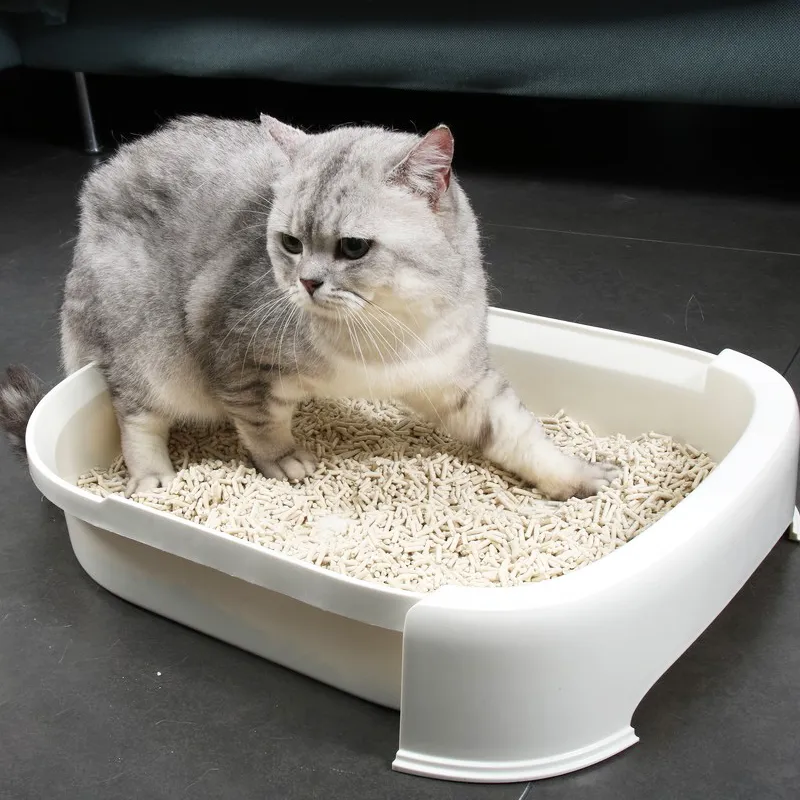
Distributors routinely hear two questions from retail buyers: does it clump, and does it control odor? Tofu litter answers both, but the chemistry is different. Tofu clumps through starch-gel formation on contact with moisture — the same mechanism that lets you thicken a sauce with cornstarch — rather than through the sodium-swelling mechanism bentonite uses. The clumps are firm enough to scoop cleanly and break down readily in water, which is what makes the flushability claim credible.
For product specs and bag-size options across retail and wholesale channels, see the Emily Pets retail-grade tofu pellet listing. For feline veterinary guidance on clumping and ammonia-lock, see the American Association of Feline Practitioners environmental needs guidelines.
Clumping strength and scoop behaviour
Premium tofu pellet lines (Emily Pets’ 1.5mm and 2.0mm strip shapes included) form solid clumps within 3–5 seconds of liquid contact. The clumps hold shape during scooping and break apart under running water in 30–90 seconds. Bentonite forms harder clumps but does not break down in water — which is why flushing bentonite reliably damages septic systems and is banned in many jurisdictions.
Ammonia and odor lock
Tofu litter has a natural buffering capacity from residual soy protein. Combined with activated charcoal in premium SKUs (Emily Pets’ deodorizing blend), it locks ammonia for 30+ days under normal multi-cat-household use, per lab reports we ship with every batch. For a distributor selling into hot or humid markets — Southeast Asia, Gulf region, southern U.S. — odor performance is a category-killer metric.
Flushability and Biodegradability: The Regulatory Edge
Two attributes put tofu pellet litter in a different regulatory bucket than bentonite: flushability and biodegradability. Most municipal wastewater authorities explicitly prohibit flushing bentonite cat litter because the sodium-swelling clumping chemistry damages pipes, pumps, and septic fields. Wood-pellet and paper-pellet litters are biodegradable but most are not certified flushable. Tofu pellet litter is both: certified biodegradable under EN 13432 / ASTM D6400 in most markets, and approved for small-volume residential flushing by major U.S. and EU wastewater authorities when used as directed.
For the U.S. compostability reference, see the ASTM D6400 standard for compostable plastics. For per-batch test reports covering dust, clumping, and ammonia-lock, see the SGS testing portal — Emily Pets ships every batch with SGS or CMA lab reports.
EN 13432 and ASTM D6400 certifications
EN 13432 (the EU industrial compostability standard) and ASTM D6400 (the U.S. compostable-plastics standard) cover the underlying polymer, not the litter as a consumer product. Tofu pellets pass both because the compressed soy-residue base is fully biodegradable in industrial composting conditions. For distributor literature, the correct framing is ‘compostable per EN 13432 / ASTM D6400’, not ‘compostable in your backyard pile’ — most tofu SKUs need industrial composting temperatures to break down within the certification timeline.
Flushability claims — read the small print
No major wastewater authority certifies a cat litter as ‘flushable’ in the same way they certify toilet paper. The claim on tofu pellet SKUs is residential-use compatibility when used as directed: small clumps, one at a time, with adequate water flow. Bulk distributors should not market tofu litter as ‘flush anything from the box down the toilet’ — that gets a product pulled from retail. The honest framing is ‘flushable in small amounts per manufacturer guidance’, which is what Emily Pets uses on pack and in retail-buyer literature.
Supplier Evaluation: What to Ask Before You Commit
Distributors and wholesale buyers evaluating a tofu pellet supplier should run a fixed checklist before signing a first purchase order. The product itself is largely commoditised at this point — most reputable Chinese tofu litter factories produce comparable pellet quality. The differentiator is the supplier’s documentation set, production capacity, and willingness to support private-label and OEM/ODM requests.
For wholesale documentation, factory audit reports, and per-batch lab reports, see the Emily Pets wholesale cat litter manufacturers page.
Certifications and lab reports
Ask for: BSCI or SA8000 social-compliance audit report (issued within the last 12 months); ISO 9001 quality-management certification; SGS or CMA per-batch lab reports covering dust percentage, clumping time, ammonia-lock duration, and biodegradability. A factory that produces all five documents is a factory you can re-sell into Tesco, Carrefour, PetSmart, and equivalent tier-one retailers. A factory that produces only the first two is a factory you can only sell to independent retailers.
Capacity and lead time
For a distributor, factory capacity matters more than unit price. A tofu pellet line running at 5,000–6,000 tonnes per month can comfortably back a 200-tonne replenishment order inside a 20-day lead time. A line running at 500 tonnes per month cannot. Ask for the supplier’s monthly output and their peak-season surge capacity (the lead-up to Black Friday and Singles’ Day is when tofu pellet factories most often fail to deliver on time).
Private label and packaging flexibility
Most tofu pellet OEM runs support custom bag sizes (1 kg, 2 kg, 5 kg, 10 kg, 20 kg, 25 kg) and custom-printed kraft or PP outer packaging at MOQs that start around one 20-foot container (≈18 tonnes). For distributors building a private-label line, ask for artwork lead time, plate-charge structure, and whether the supplier supports retailer barcode and POS-panel layouts across multiple jurisdictions — Emily Pets supports barcodes across 80+ countries as a stock service.
Margin Math: A Worked Example for Wholesale Buyers
Below is a representative margin calculation for a distributor importing one 20-foot container of tofu pellet cat litter from a Chinese supplier, selling into independent pet retail in a North American or European market. Numbers are illustrative; your actual freight, duty, and channel margins will vary. The point is to show why shipping weight — not factory unit price — is the dominant variable in the tofu category.
Representative landed-cost stack
FOB Dalian factory price: USD 1,200–1,400 per tonne for premium 1.5mm strip-shape tofu pellets in 6 kg bags. Ocean freight Dalian to Los Angeles or Rotterdam: USD 80–120 per tonne at 2026 spot rates. Import duty (HS code 2309.90 / 3824.99 depending on labelling): typically 0–6.5% in major markets. Local trucking and 3PL handling to your warehouse: USD 60–100 per tonne. Total landed cost into a U.S. or EU warehouse: typically USD 1,500–1,750 per tonne for premium 1.5mm tofu pellets, before your channel margin.
Retail price and channel margin
Independent pet retail in the U.S. and EU typically retails tofu pellet litter in the USD 2.20–3.50 per kg range, depending on brand position and bag size. Working back from USD 2.80 per kg retail, a distributor’s wholesale price to the retailer is typically USD 1.90–2.20 per kg, leaving USD 0.20–0.45 per kg as distributor gross margin after marketing, customer-service, and breakage. Tofu pellet category margins are tighter than premium bentonite but the velocity — particularly in apartment-dominant metros — is higher.
Bottom Line for Distributors
Tofu pellet cat litter is no longer a curiosity SKU. It is a category with measurable consumer demand, stable input economics, a 40–50% shipping-weight advantage over bentonite, and regulatory-friendly flushability and biodegradability claims that bentonite cannot match. For a distributor or wholesale buyer evaluating whether to add or expand a tofu pellet line, the decision is less about whether the product has a market and more about which supplier you trust to deliver the documentation, capacity, and packaging flexibility that your retail channel requires. Filter on BSCI / ISO 9001 / SGS paperwork first, then on per-batch lab reports, then on capacity and lead-time — in that order.
Why this matters to distributors and wholesalers: If you are a distributor or wholesale buyer evaluating tofu cat litter, the single most useful filter is the supplier’s lab data and certification set. A line that ships with per-batch SGS or CMA reports on dust, clumping, and ammonia-lock — and that carries BSCI / ISO 9001 / SGS social-compliance audits — is a line you can re-sell into major retail. A line without that paperwork is a line you can only move into independent pet shops and online D2C. Emily Pets ships with both.
Frequently Asked Questions
Common questions distributors and wholesale buyers ask about bulk cat litter and tofu pellet SKUs, with answers from supplier and lab sources.
Q1. How often to change kitty litter
For bulk cat litter SKUs at the consumer end, the recommended cadence is daily scooping with a full litter replacement every 2–4 weeks for clumping tofu or bentonite, and weekly for non-clumping wood or paper. The wholesale equivalent is per-batch lab reports: a distributor should require per-batch clumping, dust, and ammonia-lock data from the factory before accepting a container.
Q2. What is cat litter made of
Most cat litter is made of one of four base materials: sodium bentonite clay, compressed wood pellets, recycled paper pellets, or — the focus of this article — compressed soybean-residue pellets (tofu litter). Bulk cat litter lines from Emily Pets and comparable factories source soybean residue from tofu and soy-milk production as a by-product feedstock, not as a primary agricultural crop.
Q3. Why is my cat pooping outside the litter tray
Outside-the-box behaviour at the consumer end usually traces to placement, not litter type. For bulk cat litter distributors this matters because retailers will return calls if your SKU is blamed for avoidance behaviour. The standard placement rules — one box per cat plus one extra, away from food, in a quiet spot, stable location — apply regardless of whether the litter is tofu or bentonite.
Q4. How to stop kitty litter from tracking
Tracking — litter carried out of the box on the cat’s paws — is mostly a function of pellet size and density. Bulk cat litter SKUs with smaller pellet diameters (1.5mm strip shape rather than 3mm or 6mm) track noticeably less. A heavy litter mat at the box exit catches the rest. Tofu pellets track less than lightweight silica but more than heavy bentonite.
Q5. How to train cat to use kitty litter
Kitten litter training is a placement and routine exercise, not a litter-type exercise. Place the kitten in the box after meals and naps, keep the box in a quiet spot, and never punish accidents. For bulk cat litter distributors building a tofu line, this matters because first-time kitten owners are the largest single new-customer segment for plant-based SKUs, and training failures blamed on the litter type drive avoidable returns.
Q6. What essential oil scent covers up cat litter smell
Most veterinary behaviour guides advise against essential oils near cats — many are toxic to felines even at low concentration, including tea tree, peppermint, citrus, and eucalyptus. The safer route is unscented or lightly plant-scented bulk cat litter (light green tea or activated charcoal) combined with daily scooping. For distributors, unscented and lightly-scented SKUs outsell strongly-scented ones in retail tests.
Q7. Can you flush cat litter down the toilet
For tofu pellet litter, yes in small amounts per the manufacturer’s guidance — small clumps, one at a time, with adequate water flow. For bentonite clumping litter, no — most municipal wastewater authorities prohibit flushing sodium bentonite because the swelling clumping chemistry damages pipes, pumps, and septic systems. Bulk cat litter distributors should not market any SKU as ‘flush anything from the box down the toilet’ — that framing gets a product pulled from retail.
 English
  日本語
日本語  Русский
  العربية
  Español